
Business
CBN Retains Monetary Policy Rate at 26.5% as Inflation Continues to Ease

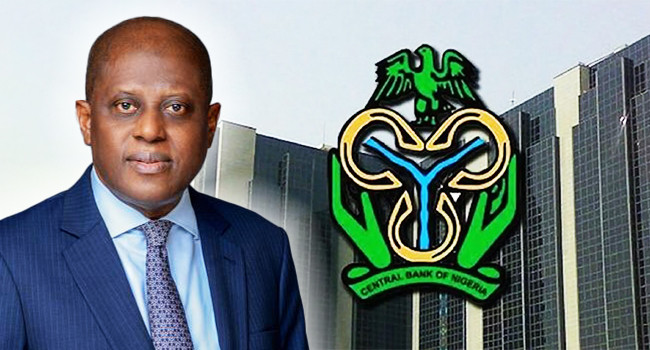
The Monetary Policy Committee (MPC) of the Central Bank of Nigeria (CBN) has retained the Monetary Policy Rate (MPR) at 26.5 per cent, citing the need to sustain the current monetary policy stance while closely monitoring inflation and global economic developments.
The decision was reached at the 306th MPC meeting held on July 20 and 21, 2026, with all 11 committee members in attendance.
In addition to retaining the benchmark interest rate, the Committee also:
Retained the Standing Facilities Corridor at +50/-450 basis points around the MPR.
Retained the Cash Reserve Requirement (CRR) for Deposit Money Banks at 45 per cent, Merchant Banks at 16 per cent, and the liquidity ratio at 30 per cent.
CBN Governor Olayemi Cardoso said the Committee’s decision followed a comprehensive assessment of domestic and global economic conditions, particularly the resurgence of hostilities in the Middle East, which poses risks to global energy prices and inflation.
The Committee noted that although Nigeria’s headline inflation moderated slightly to 15.91 per cent in June 2026 from 15.93 per cent in May, global uncertainties warrant a cautious monetary policy approach.
According to the MPC, core inflation declined to 15.92 per cent in June from 16.82 per cent in May, largely due to exchange rate stability, while food inflation rose to 17.52 per cent from 16.96 per cent, reflecting persistent supply constraints.
The Committee also observed that the 12-month average inflation rate declined for the sixth consecutive month to 17.63 per cent, indicating a sustained slowdown in price increases.
On economic performance, the MPC stated that Nigeria’s Gross Domestic Product (GDP) grew by 3.89 per cent in the first quarter of 2026, driven mainly by the resilient non-oil sector, particularly telecommunications, financial services, trade, transportation and other service industries.
The Committee further noted improvements in economic activities, as reflected by the Purchasing Managers’ Index (PMI), which rose to 50.1 points in June 2026 from 49.6 points in May, indicating continued expansion in business activities.
The MPC commended the Federal Government’s ongoing collaboration with the CBN in coordinating fiscal and monetary policies, describing the partnership as instrumental in mitigating the impact of global economic shocks on Nigeria.
It also welcomed the successful banking sector recapitalisation exercise, noting that key prudential and financial soundness indicators have strengthened, while urging continued regulatory vigilance to preserve financial system stability.
Nigeria’s gross external reserves increased to US$52.52 billion as of July 17, 2026, up from US$50.47 billion at the end of May, providing enough cover for approximately 11 months of imports, well above the international benchmark of three months.
Looking ahead, the Committee projected that inflation would continue to moderate in the medium term, supported by sustained exchange rate stability, the delayed effects of previous monetary tightening, and improved food supply during the harvest season.
However, it warned that a prolonged escalation of the Middle East conflict remains the major downside risk to both global and domestic economic stability.
The next meeting of the Monetary Policy Committee is scheduled for September 21–22, 2026.


CBN Retains Monetary Policy Rate at 26.5% as Inflation Continues to Ease

Kano Online Media Chapel Honours Gov Abba Yusuf with Excellence Award

Gov. Yusuf Declares Kano Ready for State Police

Breaking: New PMS Pump Prices Based On Dangote Pricing

Open letter to His Highness Aminu Ado Bayero, The 15th Emir of Kano–By Inuwa Waya

NBTE Grants Accreditation to 12 ABCOAD ND, HND Programs
-
 Business2 years ago
Breaking: New PMS Pump Prices Based On Dangote Pricing
-
 Featured1 year ago
Open letter to His Highness Aminu Ado Bayero, The 15th Emir of Kano–By Inuwa Waya
-
 Featured1 year ago
NBTE Grants Accreditation to 12 ABCOAD ND, HND Programs
-
 Featured3 years ago
Gov. Nasir swear-in 26 Newly appointed Commissioners in Kebbi